
Polyethylene (PE) is a polymer formed from repeating ethylene monomer units. It is generally classified into low-density polyethylene, medium-density polyethylene, and high-density polyethylene.they are popular in plastic injection molding industries.
Polyethylene (PE) is a thermoplastic resin produced through the polymerization of ethylene. In industry, the term also includes copolymers of ethylene with small amounts of α-olefins. Polyethylene is odorless, non-toxic, and has a waxy feel. It offers excellent low-temperature resistance, with minimum service temperatures ranging from -70°C to -100°C. It also has good chemical stability and is resistant to most acids and alkalis, although it is not resistant to oxidizing acids. Polyethylene is insoluble in most common solvents at room temperature, exhibits low water absorption, and possesses excellent electrical insulation properties.
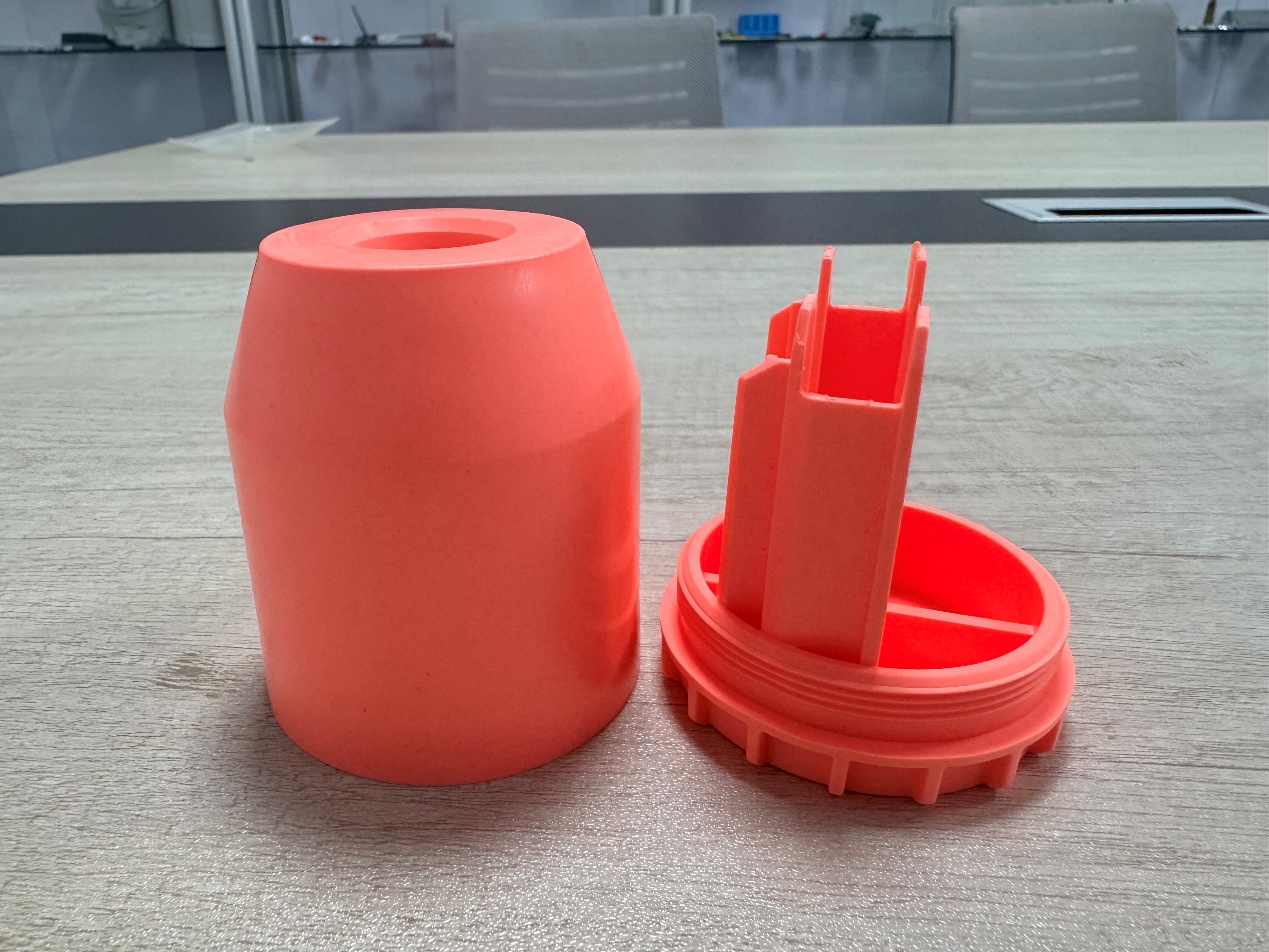
Overview
Polyethylene (PE) is a polymer produced through the polymerization of ethylene. With a development history of more than 60 years, polyethylene now ranks first among the world’s five major commodity resins in terms of production volume.
Depending on the polymerization method, molecular weight, and molecular chain structure, polyethylene is classified into high-density polyethylene (HDPE), low-density polyethylene (LDPE), and linear low-density polyethylene (LLDPE).
Low-density polyethylene (LDPE), commonly known as high-pressure polyethylene, has relatively low density and is the softest among the major PE types. It is mainly used in plastic bags, agricultural films, and similar applications.
High-density polyethylene (HDPE), commonly known as low-pressure polyethylene, offers better heat resistance, oil resistance, resistance to vapor permeation, and environmental stress crack resistance than LDPE and LLDPE. In addition, it has excellent electrical insulation properties, impact resistance, and low-temperature resistance. It is mainly used in blow molding, injection molding, and related applications.
Linear low-density polyethylene (LLDPE) is a copolymer produced by polymerizing ethylene with small amounts of higher α-olefins in the presence of a catalyst. LLDPE has an appearance similar to LDPE but slightly lower transparency, while offering better surface gloss. Its advantages include excellent low-temperature toughness, high modulus, good flex resistance, stress crack resistance, and superior low-temperature impact strength.
LLDPE has expanded into nearly all markets previously occupied by LDPE. At present, LLDPE and HDPE remain in the growth stage of their product life cycles, while LDPE gradually entered the mature stage in the late 1980s, and very few new LDPE production facilities have since been commissioned worldwide. Polyethylene can be processed through extrusion, injection molding, compression molding, blow molding, and melt spinning. It is widely used in industry, agriculture, packaging, and daily-use products. In China, polyethylene is extensively used, with film applications being the largest end-use segment, accounting for approximately 77% of LDPE consumption and 18% of HDPE consumption. Injection-molded products, wire and cable products, and hollow products also represent significant portions of polyethylene consumption, giving it a pivotal role in the plastics industry.
Mechanical Properties
Polyethylene exhibits moderate mechanical properties. Its tensile strength is relatively low, and its creep resistance is poor, but its impact resistance is good. In terms of impact strength, the relationship is generally LDPE > LLDPE > HDPE, while for most other mechanical properties the relationship is LDPE < LLDPE < HDPE. Mechanical performance is largely influenced by density, crystallinity, and molecular weight, all of which generally improve mechanical properties as they increase. Polyethylene has relatively poor environmental stress crack resistance, although this improves as molecular weight increases. Its puncture resistance is good, with LLDPE performing best among the three.
Thermal Properties
Polyethylene does not possess particularly high heat resistance, although this improves as molecular weight and crystallinity increase. It has excellent low-temperature resistance, with the brittle point generally below -50°C; as molecular weight increases, the brittle point can reach as low as -140°C. Polyethylene has a relatively large coefficient of linear thermal expansion, reaching as high as (20–24) × 10⁻⁵/K. Its thermal conductivity is relatively high.
Electrical Properties
Because polyethylene is non-polar, it possesses excellent electrical properties characterized by low dielectric loss and high dielectric strength. It can be used as an insulating material for frequency-modulation equipment, as a corona-resistant plastic, and as a high-voltage insulating material.
Environmental Performance
Polyethylene is a chemically inert hydrocarbon polymer with excellent chemical stability. At room temperature, it resists corrosion from acids, alkalis, and aqueous salt solutions, although it is not resistant to strong oxidizing agents such as fuming sulfuric acid, concentrated nitric acid, and chromic acid. Polyethylene is insoluble in most common solvents below 60°C. However, prolonged contact with aliphatic hydrocarbons, aromatic hydrocarbons, halogenated hydrocarbons, and similar substances may cause swelling or cracking. Above 60°C, polyethylene becomes slightly soluble in toluene, amyl acetate, trichloroethylene, turpentine, mineral oil, and paraffin wax. Above 100°C, it becomes soluble in tetralin.
Because polyethylene molecules contain small amounts of double bonds and ether bonds, its weatherability is relatively poor. Exposure to sunlight and rain can accelerate aging, so antioxidants and light stabilizers are typically added to improve weather resistance.
Processing Characteristics
LDPE and HDPE exhibit excellent processability due to their good flowability, relatively low processing temperatures, moderate viscosity, and low decomposition temperatures. They do not decompose even at temperatures up to 300°C in an inert gas atmosphere. However, LLDPE has slightly higher viscosity and therefore requires a 20–30% increase in motor power during processing. It is also prone to melt fracture and generally requires processing aids. Its processing temperature is slightly higher, typically reaching 200–215°C. Polyethylene has low water absorption and therefore does not require drying before processing. Molten polyethylene behaves as a non-Newtonian fluid. Its viscosity changes only slightly with temperature fluctuations but decreases rapidly and approximately linearly as shear rate increases. Among the three major PE types, LLDPE shows the slowest decrease in viscosity with increasing shear rate.
Polyethylene products tend to crystallize during cooling. Therefore, mold temperature should be carefully controlled during processing in order to regulate product crystallinity and achieve different performance characteristics. Polyethylene also has a relatively high molding shrinkage rate, which must be taken into account during plastic injection mold design.